
 Exness
 LiteFinance
 NordFX
 XM
XM
 Vantage
 EBC
EBC
 IUX
IUX
 OctaFX
 South Africa (9)
 India (9)
 Bangladesh (12)
 Germany (9)
 Thailand (10)
 Philippines (9)
 Nigeria (10)





Avoid These Costly Forex Trading Mistakes



Share:
Share:
Strategy
7 min read
Even experienced traders stumble over the same pitfalls. Skipping a clear trading plan, neglecting risk management, and letting emotions drive decisions top the list.
These errors undermine consistent profits and turn small losses into account wipeouts.
By identifying and correcting these frequent missteps, like overleveraging, ignoring market context, and failing to review past trades, you can trade smarter and protect your capital.
Winging It Doesn’t Work
One of the most common and costly mistakes in forex trading is entering trades without a structured plan.
Trading based on impulses, gut feelings, or social media tips might work once or twice, but over time, it leads to inconsistency and losses. Without a plan, you’re reacting, not strategizing, and that turns trading into guesswork.
Here’s how to avoid it:
-
Set a strategy with clear entry and exit rules. Whether you prefer trend-following, scalping, or breakout strategies, your method should outline exactly when to enter and when to close a trade based on objective criteria, not emotions.
-
Define your risk-reward ratio before placing a trade. A good rule of thumb is aiming for at least a 1:2 risk-reward ratio. This means you're risking $1 to potentially earn $2, helping to keep your account profitable even if you lose more trades than you win.
- Stick to your system no matter what. One of the hardest parts of trading is resisting the urge to "wing it" when the market gets exciting or stressful. Discipline separates successful traders from emotional ones. Trust your plan, track your results, and only make changes after thorough backtesting.
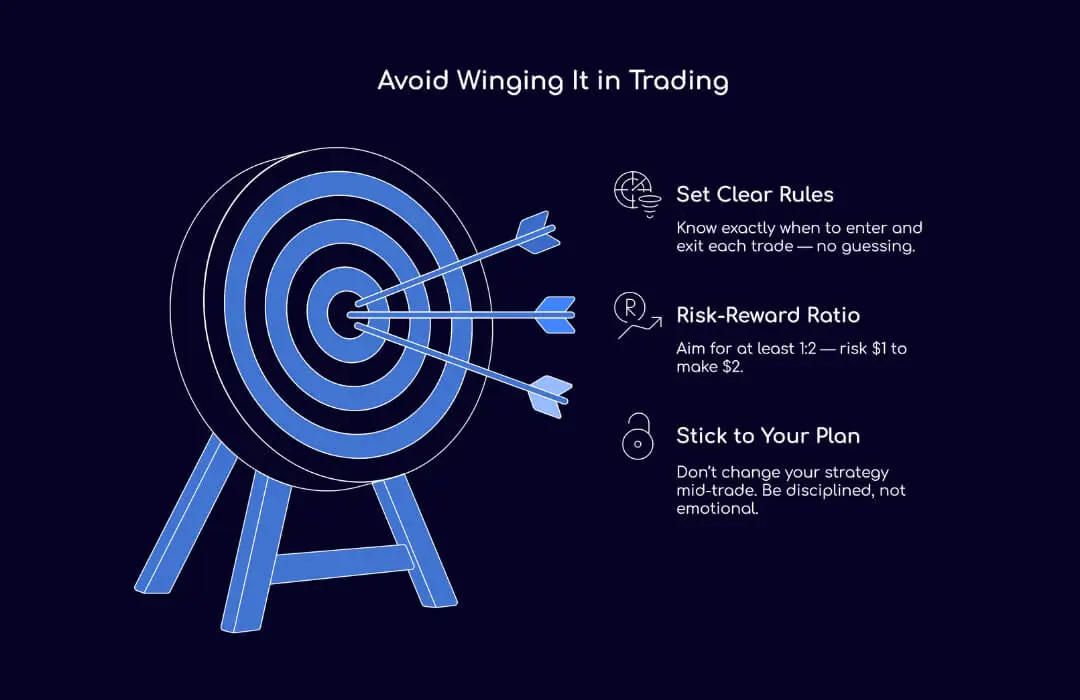
A trading plan is your edge in the market. Without it, you're just guessing in a fast-moving environment where even small mistakes can cost big. Would you drive without a map in unfamiliar territory? I guess not, the same principle applies here.
Overleveraging, Fast Track to Blowing Your Account
Leverage is one of the most powerful tools in forex trading, and also one of the most dangerous when misused. It allows you to control a large position with a small amount of capital, but that same magnifying effect applies to losses.
Many new traders are drawn in by the potential for quick gains, only to find themselves wiped out after a few bad trades.
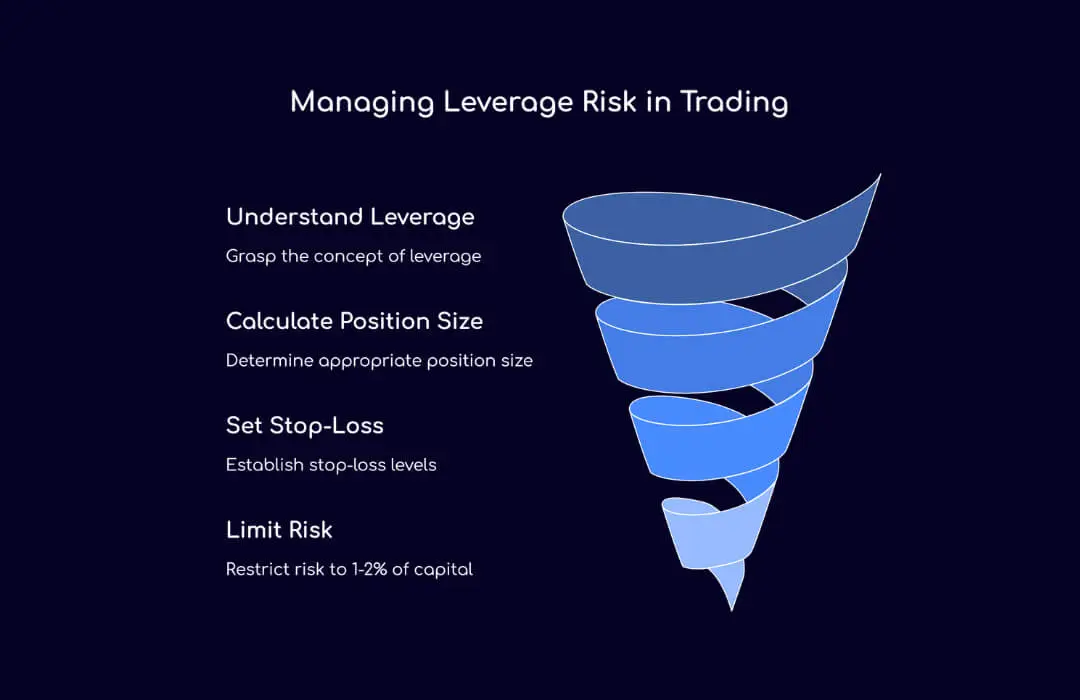
Here’s a breakdown:
- What does 1:500 leverage really mean?
It means for every $1 of your money, you're controlling $500 in the market. On a $100 account, that's a $50,000 position. Even a small price movement of 0.4% against you could trigger a margin call.
- However, it can be a trap for beginners.
High leverage makes you feel like you can make big profits fast, but in reality, it shrinks your margin for error. Just a 20-pip move in the wrong direction could wipe out your account completely if your position is too large.
- You can keep yourself safe.
Use lower leverage ratios (1:10 to 1:50 is much more manageable for beginners). Always calculate your position size based on your account balance and stop-loss level.
Risk no more than 1–2% of your capital on any single trade. That way, you can survive a string of losses and keep trading long enough to learn and improve.
Not Using Stop-Loss Orders; A Disaster in Waiting
Many traders convince themselves they’ll “monitor the trade manually,” but in a fast-moving market, hesitation can be costly.
One unexpected news event, sudden volatility, or even a moment of distraction can turn a manageable loss into a devastating one.
This is risky because:
-
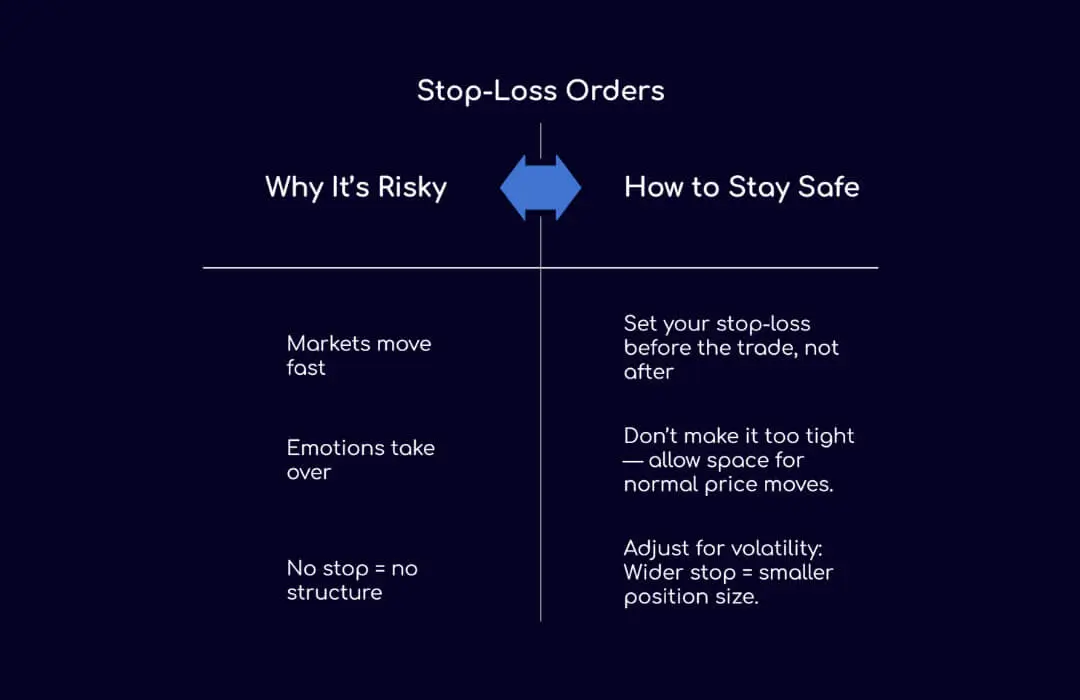
The market doesn’t wait for you. Price can move sharply within seconds, especially during economic announcements. If you’re not protected, you could lose far more than you planned.
-
It turns trading into emotional decision-making. Without a predefined exit point, you’re more likely to hold onto losing trades out of hope, denial, or fear, leading to even bigger losses.
-
There’s no discipline or structure. A stop-loss isn’t just protection, it’s a commitment to your trading plan. Ignoring it breaks that structure and increases your chances of making impulsive decisions.
-
You can avoid this mistake. Simply et a stop-loss before you enter any trade, never after. Know your maximum risk ahead of time. Also, don’t make it too tight. Allow enough room for the trade to breathe, especially in volatile markets. Tight stops can get hit by normal price fluctuations (noise).
Adapt your stop-loss to market conditions. In high-volatility periods, widen your stop and reduce your lot size to maintain proper risk control.
Emotional Trading Like Fear, Greed, and Regret
Trading isn’t just a test of strategy, it’s a test of self-control. Many traders sabotage their performance by letting emotions like fear, greed, and regret override logic. One impulsive move can erase weeks of discipline.
Fear makes you exit a good trade too early or hesitate to enter despite a solid setup. Greed pushes you to overtrade or risk more than your plan allows in search of bigger wins.
Regret keeps you dwelling on missed opportunities or past losses, clouding your judgment in the present.
Emotional trading is dangerous because it leads to impulsive decisions that break your trading rules, it increases your stress, making it harder to stay focused and objective, and it turns a strategic activity into a gambling habit.
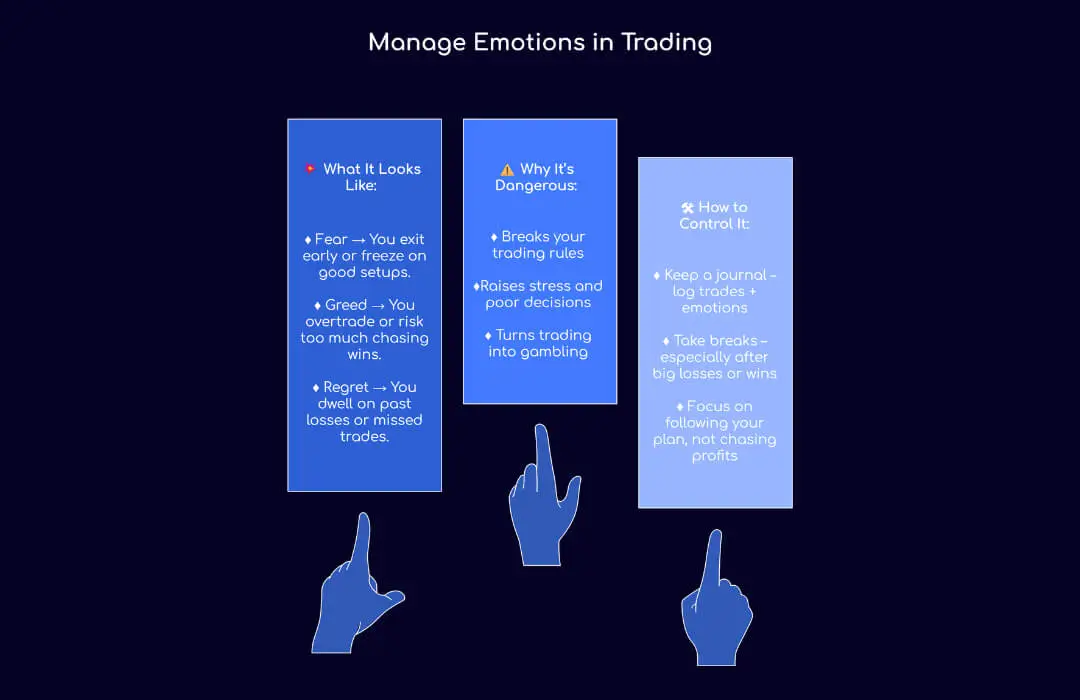
You can manage things by keeping a trading journal. Record not just trades, but also your emotions and thought processes. This helps you recognize patterns and emotional triggers.
You can also take regular breaks. Step away from the screen after a loss, a big win, or when you feel mentally exhausted.
Ultimately, focus on consistency, not quick wins. Set performance goals based on following your plan, not just profit.
Chasing Market by Jumping in Too Late
The price moves fast. But FOMO (fear of missing out) is not a trading strategy. Many traders jump in too late, after the move has already happened, only to get stuck in a reversal.
Here’s how you can navigate this. Wait for confirmed setups, plan trades before the market opens, and accept that missing a trade is better than forcing one.
Switching Strategies Too Often
Tried a moving average strategy on Monday, Fibonacci on Wednesday, and now scalping because it worked on YouTube?
Jumping from one strategy to another without giving it time to prove itself is a classic mistake.
Backtesting one strategy thoroughly, forward-testing on demo accounts, and sticking to it long enough to see results will do you some good.
Poor Money Management
Trading is about managing your money wisely. Risking too much on a single trade or trading with no position sizing plan is a fast route to account depletion.
Using risk calculators, setting daily loss limits, and diversifying trades instead of going all-in are the best ways to manage your money.
Going in Blind
Some traders only check the charts. Others only read news. Both approaches, in isolation, miss the full picture. Ignoring market trends, fundamental news, or technical indicators can lead to costly decisions.
Learn to combine technical and fundamental analysis, stay updated on economic events, and watch how markets react to data releases.
Not Learning Continuously
Forex trading isn't a "set and forget" game. Many traders fail because they stop learning. They don’t reflect, improve, or adapt.
It is best to keep a trading journal, review your past trades, and read books, taking courses, and following reputable sources.
Falling for “Get Rich Quick” Traps
If someone promises you 100% returns in a week, run. Fast.
Chasing shortcuts leads to impulsive decisions and reckless trading. The only consistent winners are those who treat trading like a business, not a lottery.
Avoiding these mistakes won't guarantee you'll become a millionaire overnight, but it will save you from unnecessary losses and emotional burnout.
Here’s a simple rule. Master the basics. Protect your capital. Let your strategy work.
Forex trading is a journey, and every smart step you take today builds a stronger future account tomorrow.
F. Nathan
Felix Nathan is a professional trader, market analyst, and business development executive with over a decade of experience in the forex and financial markets. Currently associated with AssetsFX, a leading online trading platform, Felix specializes in...