 Exness
 LiteFinance
 NordFX
 XM
XM
 Vantage
 EBC
EBC
 IUX
IUX
 OctaFX
 South Africa (9)
 India (9)
 Bangladesh (12)
 Germany (9)
 Thailand (10)
 Philippines (9)
 Nigeria (10)





Is FX Trading High Risk?



Share:
Share:
Markets
6 min read
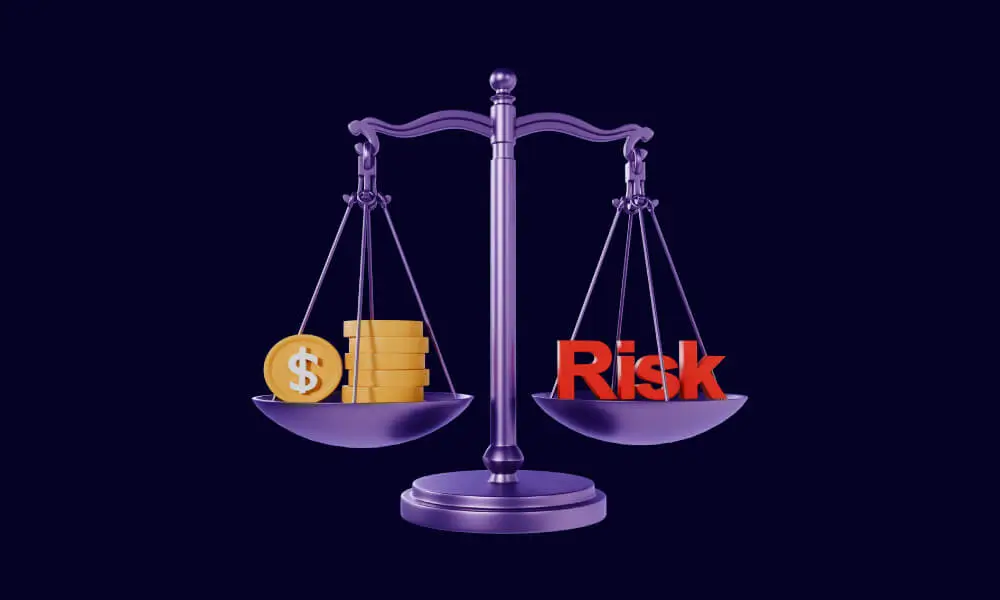
Yes, FX trading can be high risk, but only if you go in unprepared.
Let me paint a picture.
Imagine jumping into a fast-moving river without knowing how to swim. Sounds reckless.
Now, imagine someone who can swim, wearing a life jacket, with a map of the river’s current and a rescue crew nearby. The latter will be a totally different experience.
That’s forex trading in a nutshell. The risk is real, but also manageable when you know what you're doing.
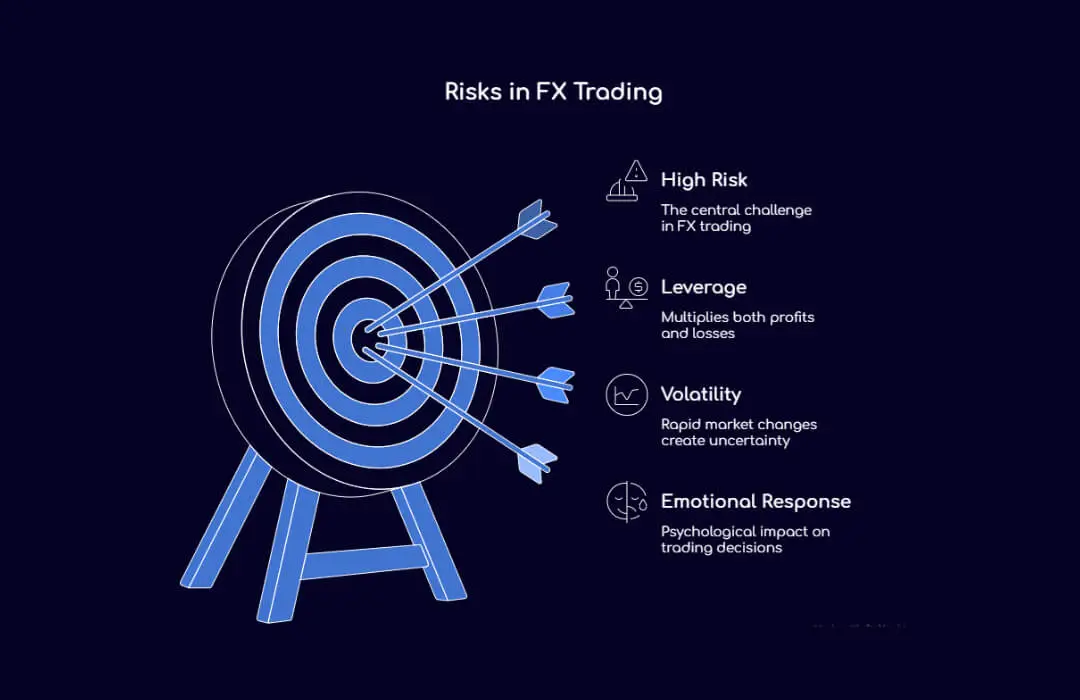
FX Trading is Considered High Risk
This is because:
Leverage Cuts Both Ways
Leverage is one of the most powerful and dangerous tools in forex trading.
Let’s say a broker offers 1:100 leverage. That means with just $100, a trader can control a $10,000 trade.
Sounds like magic, right? Well, here’s the catch…
That same leverage that multiplies profits also multiplies losses. A 1% move in the market against you could wipe out your entire account.
If you’re not using tight risk management, it’s like walking a financial tightrope without a safety net.
Volatility isn’t Always Your Friend
Yes, the forex market is highly liquid and moves quickly, that’s why traders love it.
But that speed is a double-edged sword. Volatility can bring opportunity, but also chaos if you’re not prepared.
Currency pairs can swing violently in response to interest rate announcements, inflation data, central bank speeches, geopolitical tensions, and even one out-of-pocket tweet from a major world leader.
Take NFP (Non-Farm Payrolls), for example. One surprising number can send prices flying in either direction. If you’re in a trade without a clear strategy or proper stop loss in place? You’re toast.
The Market Doesn’t Just Test Your Strategy, It Tests Your Mindset
Even the best price action traders can fall apart emotionally when real money is on the line.
For instance, if a trade goes against left, traders tend panic-sell at the worst price.
If traders win a big trade. They might get overconfident and over-leverage the next one.
On the other hand, when they lose three in a row, they might start revenge trading to “make it all back.”
Does this sound a little too familiar?
The real danger isn’t just the market it is your emotional response to it. And that’s why trading psychology is often more important than any technical indicator.
Most New Traders Don’t Do Their Homework
They hear about someone flipping $100 into $1,000 and think, “I can do that too”.
So they skip demo trading, avoid learning risk management, trade huge lot sizes, and fall for YouTube strategies that promise 95% win rates.
They don’t know what a proper risk-reward ratio looks like, how to use lot size calculators, or how to handle drawdowns.
Before they even understand market structure or price action, they’re live-trading high-volatility news events with 1:500 leverage.
And the result? They lose money.
Not because the market is unfair, but because most people trade like gamblers, not professionals.
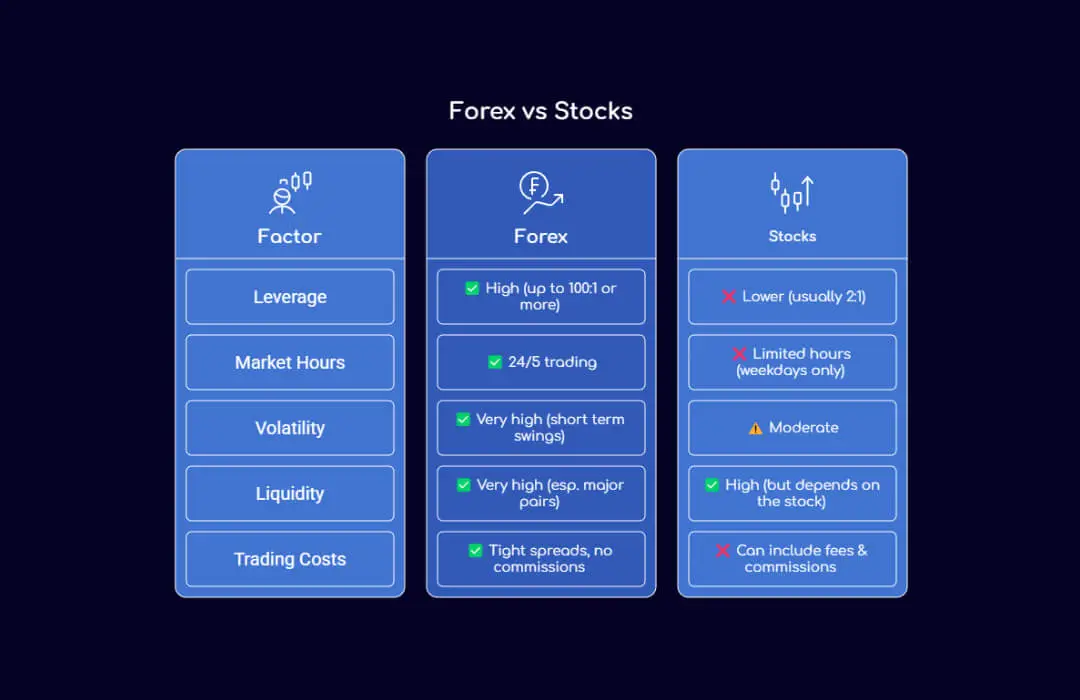
Is Forex Trading Riskier Than Stocks?
Yes and no.
Forex is riskier in the short term, especially for beginners using high leverage.
However, it also offers more liquidity, lower fees, and 24/5 market access compared to stocks.
The
real difference
lies in leverage and trader behavior.
A disciplined forex trader with solid risk management is less exposed than a reckless stock trader with FOMO (Fear of Missing Out).
How to Lower Risk in Forex Trading (Without Killing Your Profit Potential)
Forex is a high-stakes game. But that doesn’t mean you have to play recklessly. You can limit your downside and still stay in the profit lane.
Master Risk Management
This is the golden rule of trading. If you ignore it, the market will force you to learn the hard way.
-
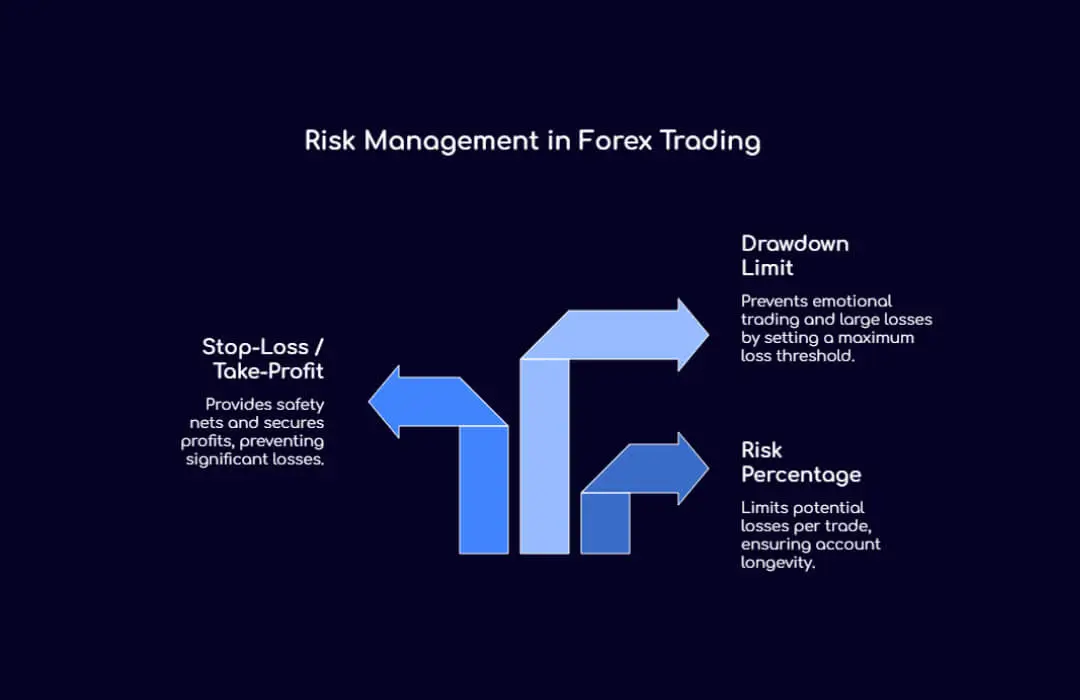
Only risk 1–2% per trade. This keeps you in the game even after a losing streak. For a $100 account, that means risking no more than $1–$2 per trade.
-
Use stop-loss and take-profit orders. These aren’t just tools, they’re safety net and exit plans. A well-placed stop loss protects traders when trades go wrong, and a take-profit locks in wins before the market reverses.
- Know your drawdown limit. Have a max loss in mind. If you lose, say, 10% of your account balance, step away and re-evaluate. Don’t let ego turn small losses into big disasters.
Use a Demo Account First
There’s no glory in blowing your first live account just to “see how it goes.” Practice with a demo account before you go live.
- Test different strategies. Want to try out a price action breakout setup? Do it in demo mode first.
- Get comfortable with the platform, so you can avoid clicking the wrong buttons when real money is at stake.
- Build confidence. You need some screen time to build your trading confidence.
Ultimately, teat your demo account like it's real money. That way, when you do go live, your psychology is already tuned in.
The Broker Might Offer 1:500 or Even 1:1000 Leverage, But That Doesn’t Mean You Should Use It
High leverage is basically high risk. It only takes a small market move against in the wrong direction to wipe out your account.
- Use just enough leverage to allow flexibility, but not so much that one trade ruins your week.
- If you’re losing sleep over a trade? You’re overleveraged.
- Use leverage like seasoning, just enough to bring out flavor, not to burn and choke.
Random Trades Get Random Results: You Need a Tested Method
To do this, first pick a style that fits you. Scalping, swing trading, day trading, or long-term trend following are some of the most popular trading styles.
- Stick to your entry and exit rules. Don’t adjust them mid-trade because of any gut feelings.
- Backtest your strategy. See how it performs before risking real money.
The Forex Market Doesn’t Exist in a Vacuum
Currencies are heavily influenced by global events.
- Economic indicators matter. Keep tabs on GDP data, interest rate announcements, inflation figures, and unemployment reports.
- You may also want to follow central banks updates. The Federal Reserve, ECB, BoJ, and others have a huge impact on currency strength.
Finally, watch the news. Geopolitical tensions, elections, and even natural disasters can shake up the forex market too.
Final Words
Yes, forex trading is risky, but the real danger isn’t just the market, it is the trader as well.
When traders skip education, ignore risk management, and let their emotions drive decisions, the odds turn against them.
Don’t be that trader.
F. Nathan
Felix Nathan is a professional trader, market analyst, and business development executive with over a decade of experience in the forex and financial markets. Currently associated with AssetsFX, a leading online trading platform, Felix specializes in...